



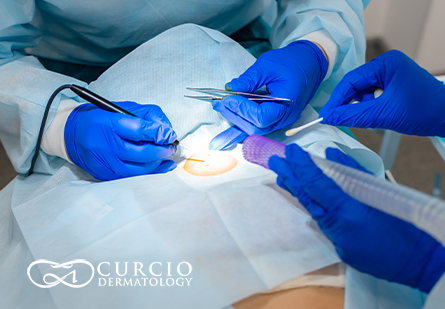
Mohs surgery is a highly specialized procedure used to remove skin cancer while preserving healthy tissue. It’s often described as the “gold standard” of skin cancer surgery because it combines precision removal, microscopic margin control, and cosmetic reconstruction — all performed on the same day. Patients choose Mohs surgery for its high cure rate, up to 99%, its ability to leave the smallest possible scar, and its success in treating recurrent or complex cancers.
By removing and examining layers of skin one at a time, dermatologists can ensure that every cancerous cell is identified and removed. This step-by-step process minimizes damage to surrounding tissue and supports the healing phase. Once your Mohs surgery is complete, recovery becomes the most important part of your journey — how you care for your skin now determines your long-term results.
In this guide, we’ll share expert, science-based tips to help you heal faster, reduce scarring, and protect your skin’s health after Mohs surgery.
Quick Answer: How Long Does Mohs Surgery Recovery Take?
Most patients begin early healing within the first 1–2 weeks after Mohs surgery. Redness, swelling, tenderness, scabbing, and tightness are common during the first few days. However, scar maturation can continue for several months, and the final scar may take up to 12 months to fully soften, flatten, and fade.
Recovery depends on several factors, including the size and depth of the wound, where the cancer was removed, whether stitches, a flap, or a graft were needed, and your overall health. Facial areas such as the nose, cheeks, lips, ears, and forehead may require extra care because the skin is delicate and more visible.
If you are unsure whether your healing is normal, contact your dermatologist instead of waiting. Early guidance can help prevent infection, delayed healing, and unnecessary scarring.
Why It Matters Who Performs Your Mohs Surgery
Not all surgeons performing Mohs surgery have the same advanced training. Any board-certified dermatologist may offer it, but fellowship-trained Mohs surgeons complete an additional year of supervised, hands-on surgical training through the American College of Mohs Surgery. This extra education focuses on three core areas: tumor mapping, microscopic tissue analysis, and reconstructive techniques. The result is deeper expertise in both cancer removal and cosmetic repair.
Dr. Natalie Curcio is a board-certified, fellowship-trained dermatologic and Mohs surgeon. She has performed thousands of Mohs procedures, reconstructions, and follow-up scar revisions. Her fellowship in Mohs Surgical Dermatology ensures that patients receive comprehensive care — from diagnosis to post-operative restoration.
Additionally, Dr. Curcio’s second fellowship in Cosmetic & Laser Surgery gives her a unique advantage in reducing the visibility of scars and improving post-surgical texture. Choosing a fellowship-trained Mohs surgeon ensures your procedure is both medically precise and cosmetically mindful — two priorities that directly influence recovery success.
What to Expect Immediately After Mohs Surgery
After Mohs surgery, you can expect mild redness, swelling, or tenderness around the treated area. These are normal healing responses. The wound may be stitched closed, left open to heal naturally, or reconstructed using a skin flap or graft if necessary.
The first 48 hours are crucial: keep the site elevated if possible, avoid strenuous movement, and follow your dermatologist’s wound-care instructions carefully. It’s common to notice some tightness as the skin begins contracting to close the wound — this is a normal stage of the healing process.
Pro Tip: Apply a cold compress for 10 minutes several times a day during the first two days after Mohs surgery to limit swelling. Avoid placing ice directly on the wound.
Because Mohs surgery targets precise tissue layers, the healing process tends to be smoother than after traditional excisions. Still, every patient’s timeline varies depending on age, immune health, wound size, and the type of repair used.
Essential Tips for Faster Healing
After your appointment, your dermatologist will give you an individualized aftercare plan. Follow it exactly — skipping steps can slow recovery. Cleanse the wound gently with mild soap and water, pat dry, and apply petroleum jelly or your prescribed ointment to keep the site moist.
Keeping a wound slightly moist encourages epithelial cell migration, a process that helps new skin form more efficiently. However, too much moisture may cause skin maceration, so balance is key. Cover the wound with a sterile bandage, change it as directed, and avoid touching the area with unwashed hands.
If your Mohs surgery was performed on the face, nose, or ear, be especially careful to protect it from bumping or friction — even mild trauma can reopen delicate skin. Patients who exercise regularly should avoid high-impact activity for the first 1–2 weeks.
Typical Mohs Surgery Recovery Timeline
| Time After Surgery | What to Expect | Recommended Care | When to Call Your Dermatologist |
|---|---|---|---|
| Days 1–3 | Redness, swelling, tenderness, slight bleeding | Keep the site clean, apply ointment, use a cool compress, and keep the area elevated if possible | Call if bleeding does not stop with firm pressure, pain worsens, or swelling becomes severe |
| Week 1 | Scabbing and early tissue repair | Continue gentle cleaning, avoid picking or rubbing, and change dressings as instructed | Call if you notice pus, foul odor, spreading redness, fever, or wound separation |
| Weeks 2–4 | New skin formation and reduced tenderness | Apply SPF 30+ once the wound has closed, avoid swimming, and protect the area from sun exposure | Call if the wound is not closing, reopens, or becomes increasingly painful |
| Months 1–6 | Scar maturation, fading, and texture changes | Use silicone gel or sheets if approved, begin gentle massage when cleared, and continue sun protection | Ask about scar treatment if the scar feels raised, tight, itchy, or cosmetically concerning |
| Up to 12 Months | Texture and color normalize over time | Consider laser resurfacing or cosmetic follow-up if needed | Schedule follow-up care if scar thickening, redness, or uneven texture persists |
What Not to Do After Mohs Surgery
Knowing what not to do after Mohs surgery is just as important as knowing how to care for the wound. The wrong activity or skincare product can increase bleeding, delay healing, reopen the wound, or make scarring more noticeable.
After Mohs surgery, avoid the following unless your dermatologist has cleared you:
- Do not do strenuous exercise, heavy lifting, running, or high-impact workouts too soon.
- Do not bend over repeatedly if your surgical site is on the face, scalp, or upper body, as this can increase pressure and bleeding.
- Do not pick at scabs, stitches, crusting, or peeling skin.
- Do not rub, scratch, or pull at the wound.
- Do not swim, use hot tubs, sit in saunas, or soak the wound until cleared.
- Do not smoke, as smoking can reduce blood flow and slow wound healing.
- Do not expose the healing area to direct sun.
- Do not apply makeup, harsh skincare, exfoliants, retinoids, or unapproved ointments directly over the wound.
- Do not remove dressings early unless instructed.
- Do not ignore signs of infection or delayed healing.
If you are unsure whether an activity is safe, contact your dermatologist before resuming your normal routine.
How to Minimize Scarring After Mohs Surgery
Minimizing scarring is a common goal after Mohs surgery, especially on highly visible areas such as the face or neck. The most effective strategy for scar prevention is sun protection. Ultraviolet radiation can darken scars and slow collagen remodeling, so always use a broad-spectrum sunscreen, SPF 30 or higher, once your wound has closed.
Avoid swimming pools, saunas, or steam rooms until cleared by your dermatologist — excessive moisture can soften the healing site and increase infection risk. When approved, silicone gels or sheets can flatten and smooth scars by hydrating the tissue and reducing tension.
Gently massaging the healed area in small circles for 5–10 minutes daily promotes collagen alignment and flexibility. Patients recovering from Mohs surgery can also discuss advanced treatments such as laser therapy or microneedling with their dermatologist to further refine appearance once full healing occurs.
Remember: Complete scar maturation may take up to a year, but most patients notice significant improvement within the first 3–6 months.
To help minimize scarring after Mohs surgery, follow your wound-care instructions closely, protect the area from trauma, keep the wound moist as directed, avoid sun exposure, and schedule follow-up visits if the scar becomes raised, red, tight, itchy, or uneven.
Healing After Mohs Surgery on the Face
Healing after Mohs surgery on the face can feel more stressful because swelling, bruising, stitches, and scarring are more visible. Facial skin is also more delicate, and areas near the eyes, lips, cheeks, nose, forehead, and ears may swell more noticeably during the first few days.
Mild bruising, tightness, redness, and tenderness are common. Depending on the size and location of the skin cancer, the wound may be closed with stitches, repaired with a flap or graft, or allowed to heal naturally. Your dermatologist will choose the repair method that best supports both cancer clearance and cosmetic outcome.
To support facial healing after Mohs surgery:
- Keep the area clean and covered as instructed.
- Sleep with your head elevated for the first few nights if recommended.
- Avoid facial massage, makeup, exfoliating products, and active skincare ingredients until cleared.
- Protect the healing area from friction caused by masks, glasses, hats, or clothing.
- Use sunscreen once the wound has closed.
- Keep all follow-up appointments so scar healing can be monitored.
Because facial Mohs surgery can affect appearance, early communication matters. If you are concerned about swelling, scar appearance, tightness, or slow healing, your dermatologist can recommend scar care, laser therapy, or other cosmetic treatment options once the area has fully healed.
What to Expect After Mohs Surgery on the Nose
After Mohs surgery on the nose, recovery may involve more swelling, bruising, and tightness than patients expect. The nose has a prominent shape, limited extra skin, and important cosmetic contours, so even a small wound can require careful repair.
Depending on the size and depth of the cancer, your dermatologist may close the area with stitches, use a skin flap, use a graft, or allow the wound to heal naturally. Some patients may notice temporary changes in contour, firmness, redness, or sensitivity as the area heals.
To protect the nose after Mohs surgery:
- Avoid bumping or rubbing the surgical site.
- Be careful with glasses or sunglasses if they place pressure near the wound.
- Avoid sleeping directly on the treated side.
- Keep the dressing secure and clean.
- Do not pick at scabbing or crusting.
- Protect the area from sun exposure once the wound has closed.
- Follow all scar-care instructions, especially if a flap or graft was used.
Nasal scars can continue improving for several months. If you are concerned about visible scarring, uneven texture, or redness after healing, your dermatologist may recommend silicone products, laser treatment, resurfacing, or other scar-refinement options.
Why Mohs Recovery May Feel Slow
Some patients worry about slow Mohs recovery, especially when the surgical site is on the face or nose. In many cases, healing is still normal even if redness, tightness, tenderness, or scar firmness lasts longer than expected.
Mohs surgery recovery may feel slow because of:
- The size or depth of the wound
- The location of the surgery
- A skin flap or graft repair
- Wound tension
- Age
- Diabetes or circulation issues
- Smoking
- Immune health
- Infection
- Certain medications
- Prior radiation or previous surgery in the same area
If the wound is gradually improving, slow healing may simply reflect the natural repair process. However, if healing seems stalled, pain is worsening, the wound opens, or redness spreads, contact your dermatologist. Prompt care can help protect both your health and your cosmetic result.
When to Call Your Dermatologist
It’s important to monitor the surgical site closely after Mohs surgery. Contact your dermatologist immediately if you experience any of the following:
- Increasing redness or warmth around the wound
- Pus or foul-smelling drainage
- Persistent bleeding or wound separation
- Fever, chills, or general malaise
- Worsening pain instead of gradual improvement
- Red streaking near the wound
- Swelling that becomes severe or one-sided
- A wound that appears to be opening instead of closing
Early intervention prevents infection and helps preserve cosmetic outcomes. Even if you heal well, schedule regular check-ups to monitor for new or recurring skin cancers. Many patients return for annual skin examinations to ensure long-term skin health.
Healing after Mohs surgery takes time and patience. By combining excellent surgical technique with careful at-home care, you can expect strong, lasting, and cosmetically satisfying results.
Long-Term Care After Mohs Surgery
Your dermatologist will likely schedule follow-up visits in the weeks and months after Mohs surgery to evaluate scar development and detect any residual cancer cells. Consistent aftercare is vital for maintaining results.
Long-term steps may include:
- Daily use of sunscreen on the surgical site
- Application of silicone gel or vitamin E oil after full closure
- Avoiding tanning beds and unprotected outdoor exposure
- Maintaining hydration and balanced nutrition for skin health
- Yearly professional skin checks
Some patients who undergo Mohs surgery benefit from minor cosmetic refinements later, such as laser dermatology or resurfacing treatments, to even out color and texture differences.
Long-Term Skin Cancer Follow-Up After Mohs Surgery
Mohs surgery removes the treated skin cancer with a high level of precision, but it does not prevent new skin cancers from developing in the future. Patients who have had one skin cancer may have a higher risk of developing another, which makes ongoing skin checks important.
Long-term follow-up may include full-body skin exams, monitoring the surgical site, checking for new or changing spots, and reviewing sun-protection habits. Your dermatologist may recommend a follow-up schedule based on your diagnosis, health history, skin type, and risk factors.
To protect your skin after Mohs surgery:
- Wear broad-spectrum SPF 30 or higher every day.
- Reapply sunscreen during outdoor activity.
- Wear a wide-brimmed hat and protective clothing.
- Avoid tanning beds.
- Watch for new, changing, bleeding, or non-healing spots.
- Keep routine dermatology appointments.
Why Choose Curcio Dermatology for Mohs Surgery Recovery in Nashville
Curcio Dermatology provides Mohs surgery recovery care for patients in Nashville and surrounding Middle Tennessee communities. Recovery care is not only about closing the wound — it is about protecting your skin health, reducing complications, supporting scar healing, and helping you feel confident in your final result.
With fellowship training in both Mohs surgery and cosmetic laser surgery, Dr. Curcio brings a unique combination of cancer-focused precision and cosmetic judgment to post-operative care. This is especially valuable for patients healing after Mohs surgery on the face, nose, ears, lips, neck, or other highly visible areas.
About Dr. Natalie Curcio
Dr. Curcio is a board-certified, fellowship-trained dermatologic and Mohs surgeon based in Nashville, TN. A member of the American College of Mohs Surgery and the American Society for Dermatologic Surgery, she combines oncologic precision with cosmetic artistry. Dr. Curcio has performed thousands of Mohs surgeries and reconstructions, offering patients advanced care and long-term guidance through every phase of recovery.
When You’re Ready to Heal Confidently
Your dermatologist will be your best partner throughout the Mohs surgery recovery journey. For personal aftercare guidance or to discuss laser and scar-management options, contact our office or schedule a follow-up appointment with our team.
Frequently Asked Questions About Mohs Surgery Recovery
How long does it take to heal after Mohs surgery?
Most patients begin early healing within 1–2 weeks after Mohs surgery. However, scar maturation can take several months, and the final scar may continue improving for up to 12 months.
What should you not do after Mohs surgery?
Avoid strenuous exercise, heavy lifting, swimming, soaking, picking at the wound, smoking, direct sun exposure, and unapproved skincare products until your dermatologist clears you.
How do you minimize scarring after Mohs surgery?
You can minimize scarring by following wound-care instructions, keeping the wound moist as directed, protecting the area from sun, using silicone products when approved, and asking about laser or scar-refinement options if needed.
Is swelling normal after Mohs surgery on the face?
Yes. Mild swelling, redness, bruising, and tightness are common after Mohs surgery on the face. However, worsening pain, spreading redness, pus, fever, or wound separation should be reported to your dermatologist.
What happens after Mohs surgery on the nose?
After Mohs surgery on the nose, patients may experience swelling, bruising, tenderness, and visible scar changes. Depending on the wound, repair may involve stitches, a flap, a graft, or natural healing.
Why is my Mohs surgery recovery slow?
Slow Mohs recovery may be related to wound size, wound location, flap or graft repair, age, diabetes, smoking, immune health, infection, or wound tension. If healing seems delayed or symptoms worsen, contact your dermatologist.
When can I exercise after Mohs surgery?
Many patients are advised to avoid strenuous exercise for 1–2 weeks after Mohs surgery, but the exact timing depends on the wound location and repair type. Follow your dermatologist’s specific instructions before returning to workouts.
When should I call my dermatologist after Mohs surgery?
Call your dermatologist if you notice worsening redness, warmth, pus, foul drainage, persistent bleeding, wound separation, fever, chills, or increasing pain.