



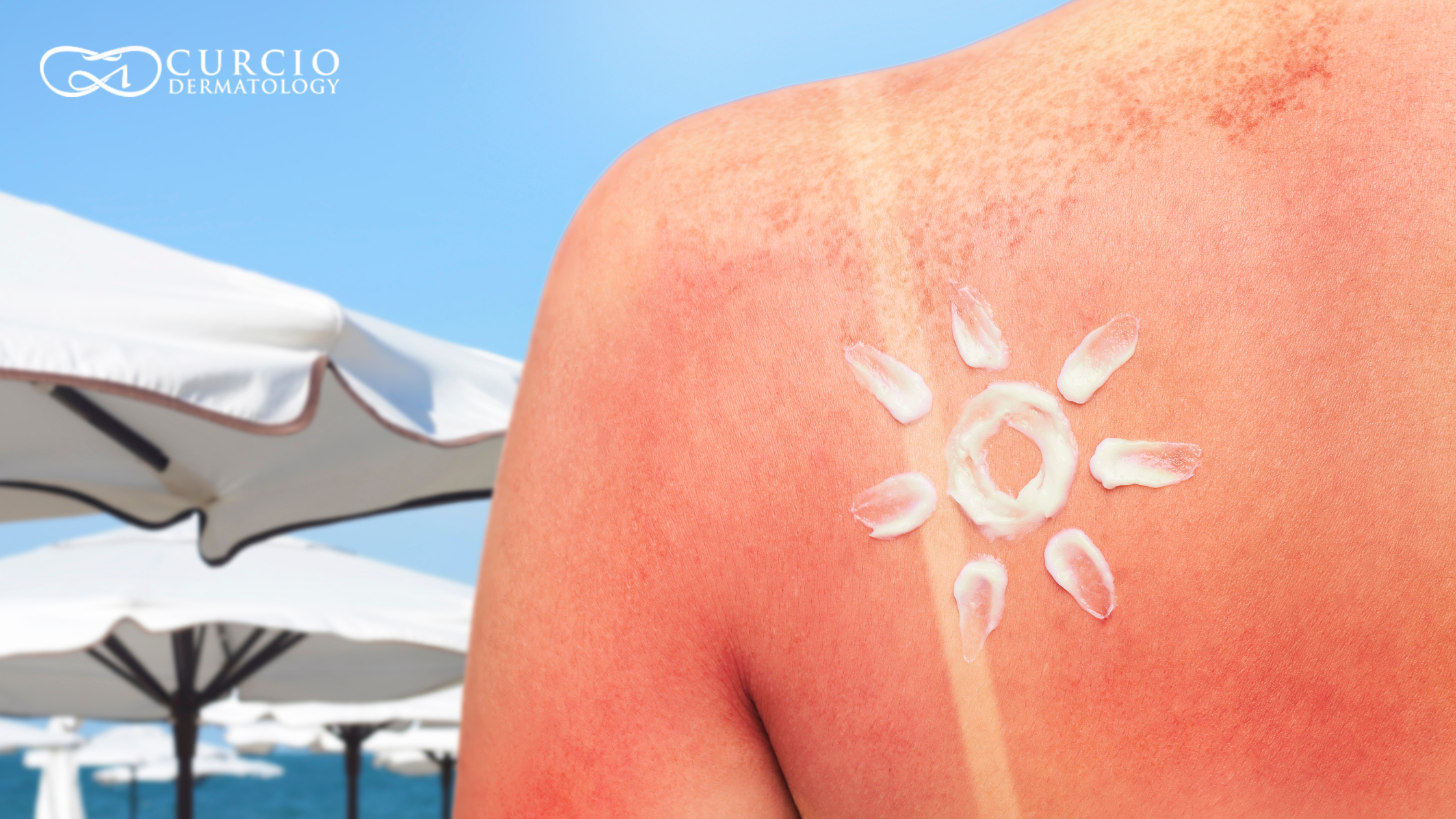
Curcio Dermatology recommends sunscreen to Nashville residents who are seeking to prevent or avoid skin cancer. Although skin cancer is the most common type of cancer in the United States, there are several steps you can take to minimize your risk.
The American Academy of Dermatology (AAD) recommends taking the following steps to minimize your chances of developing skin cancer:
- Seek shade whenever possible
- Wear protective apparel and clothing, such as long-sleeved shirts, sunglasses, and hats
- Apply a water-resistant sunscreen with an SPF of 30 or higher (even on shady days)
According to the Skin Cancer Foundation, which reports that 20 percent of Americans will develop skin cancer by age 70, clouds may block only about 20 percent of UV rays. That means that on a cloudy day in Nashville, you could still be exposed to more than half of the sun’s powerful radiation. UV rays can also reach your skin by bouncing off reflective surfaces around you—so the shade above you may not be as protective as you assume.
Why Sunscreen Matters in Nashville (and Similar Climates)
Living in Nashville means bright, humid summers and mild winters, yet UV rays stay strong all year. The Environmental Protection Agency’s UV Index frequently shows moderate to high levels, even in spring and fall. Surfaces like water, glass, metal, and concrete can reflect UV light and intensify exposure, especially at popular outdoor spots, lakes, rooftops, and patios in Middle Tennessee.
That’s why Curcio Dermatology urges residents to apply broad-spectrum, water-resistant sunscreen with SPF 30 or higher daily—whether you’re commuting to downtown Nashville, driving on I?65 or I?40, gardening in your backyard, walking in a local park, or enjoying time outdoors at festivals, games, or concerts.
For residents of sunny, tropical regions such as Calamba and the rest of South Luzon, the same principles apply: UV exposure remains significant even on overcast or rainy days, and daily sunscreen use helps protect skin year-round in hot, humid climates with high ambient UV.
The Science of UV Radiation and Skin Cancer
Ultraviolet (UV) radiation from the sun is divided into two main types that affect the skin:
- UVA (longer wavelength): Penetrates more deeply into the skin, contributes to photoageing (wrinkles, sagging, discoloration) and plays a role in skin cancer development over time.
- UVB (shorter wavelength): Primarily responsible for sunburn and directly damages DNA in skin cells, triggering mutations that can lead to skin cancer.
Chronic exposure to UVA and UVB damages the DNA in keratinocytes (cells that give rise to basal cell carcinoma and squamous cell carcinoma) and melanocytes (cells that can become melanoma). Over many years, repeated UV exposure can overwhelm the skin’s natural repair mechanisms, increasing the likelihood that abnormal cells will grow into skin cancers.
Even when you are not burning, low-grade, cumulative UV exposure from daily routines—driving, walking to work, sitting near windows—adds up. This is why dermatologists stress daily sunscreen use, not just on beach days or vacations.
How Sunscreen Works (Chemical vs Mineral)
Sunscreens are broadly divided into two categories based on their active ingredients:
-
Chemical (organic) filters
-
- Examples: avobenzone, octisalate, octocrylene, homosalate.
- Mechanism: Absorb UV radiation and convert it into a small amount of heat, reducing the amount of UV that penetrates the skin.
- Pros: Often lighter, more cosmetically elegant, easier to apply under makeup or for oily skin.
- Considerations: Some individuals with sensitive skin may experience irritation or stinging, particularly around the eyes.
-
Mineral (physical) filters
-
- Main ingredients: zinc oxide and titanium dioxide.
- Mechanism: Reflect and scatter UV radiation away from the skin’s surface (they also absorb some UV).
- Pros: Often better tolerated by sensitive, rosacea-prone, or post-procedure skin; start working immediately upon application.
- Considerations: Can leave a white cast on darker skin tones, though newer micronized and tinted formulations greatly reduce this issue.
For patients with sensitive or compromised skin, including those after procedures like laser treatments, microneedling, or Mohs surgery, mineral-based sunscreens containing zinc oxide and/or titanium dioxide are often preferred.
How to Choose the Right Sunscreen
At Curcio Dermatology, we remind patients that the best sunscreen is the one you’ll actually wear every day. Dermatologists recommend choosing formulas that provide:
-
Broad-spectrum protection
-
Must clearly state “broad-spectrum,” meaning it protects against both UVA (ageing) and UVB (burning) rays.
-
-
SPF 30 or higher
-
SPF 30 blocks about 97% of UVB rays in ideal conditions when applied correctly.
-
SPF 50 blocks slightly more UVB and is better for extended outdoor activity or high-intensity sun exposure.
-
-
Water resistance
-
Look for “water-resistant 40 minutes” or “water-resistant 80 minutes” on the label if you’ll be sweating, swimming, or in humid conditions.
-
-
Formulation suited to your skin
-
Oily or acne-prone: lightweight, non-comedogenic gels, fluids, or oil-free lotions.
-
Dry or mature skin: creamier, hydrating formulations with added moisturizers and antioxidants.
-
Sensitive or post-procedure skin: mineral (zinc oxide/titanium dioxide) sunscreens, often fragrance-free and alcohol-free.
-
“The best sunscreen is the one you’ll actually wear every day,” says Dr Natalie Curcio, board-certified dermatologist at Curcio Dermatology.
When and How to Apply Sunscreen
For optimal protection and better skin-cancer prevention:
- Apply 15–30 minutes before going outside so the product can form an even, protective layer.
- Use enough: as a guide, about one ounce (a shot-glass amount) for full-body coverage, and a nickel-sized amount for face and neck.
- Don’t miss high-risk areas: ears, back of neck, hairline, scalp parts, tops of feet, backs of hands, and lips (use an SPF lip balm).
- Reapply at least every 2 hours, and immediately after swimming, sweating, or towel-drying.
- Combine sunscreen with UPF clothing, wide-brimmed hats, and UV-blocking sunglasses for best protection.
- Remember: there is no “all-day” or “sweat-proof” sunscreen—regular reapplication is essential.
Current Public-Health and Regulatory Guidance
Sunscreen is regulated as an over-the-counter drug in the United States. The U.S. Food and Drug Administration (FDA) emphasizes using broad-spectrum sunscreens with an SPF of at least 15 daily and higher SPFs for longer outdoor exposure, along with protective clothing and shade as part of a total sun-safety plan. You can learn more at:
- Sunscreen: How to Help Protect Your Skin from the Sun
- Tips to Stay Safe in the Sun: From Sunscreen to Sunglasses
These resources align with guidance from dermatology and cancer-prevention experts, reinforcing that sunscreen is one important component of a comprehensive approach to reducing skin-cancer risk.
Sunscreen Use in Children, Teens, and Older Adults
-
Infants under 6 months
-
- Should be kept out of direct sun as much as possible.
- Use shade (strollers, umbrellas), lightweight long sleeves and pants, and wide-brimmed hats; ask a pediatrician before using sunscreen on very young infants.
-
Children and teens
-
- Regular sunscreen use builds healthy habits early and helps reduce cumulative UV damage that may lead to skin cancer later in life.
- Choose broad-spectrum SPF 30+ that is easy to apply: sticks for the face, sprays (used correctly) or lotions for the body; avoid inhalation of spray and rub it in thoroughly.
-
Older adults
-
- Continued daily sunscreen use helps prevent new skin cancers and reduces the risk of additional lesions in those with a history of skin cancer.
- Given that cumulative sun exposure is a major risk factor, consistent protection is especially important for people with outdoor occupations or hobbies.
Improving Sunscreen Access
A public-health issue in Tennessee is that not everyone has access to sunscreen. Dr Curcio recently met with Senator Marsha Blackburn and Rep. Jim Cooper to discuss this challenge and other key topics, such as medication affordability and a sustainable Medicare program. At Curcio Dermatology, we believe sun-safety education and access to protective products should be available to every Tennessean.
Improving access means:
- Supporting community programs that provide free or low-cost sunscreen at schools, sports fields, parks, and community centers.
- Encouraging workplaces and outdoor venues to offer sunscreen stations.
- Educating high-risk groups (outdoor workers, athletes, people with fair skin, those on photosensitizing medications, and those with a family history of skin cancer) about the importance of regular sunscreen use.
Did You Know?
- A tan is a physical indication that your skin has been injured, not a sign of health. UV rays—from the sun or tanning beds—damage skin cells and accelerate ageing.
- Even one tanning session increases your risk of melanoma, the deadliest form of skin cancer.
- Indoor tanning devices are considered carcinogenic by major health authorities, and avoiding tanning beds is a key step in lowering your lifetime risk.
If you notice a new mole, dark spot, or change in your skin—such as asymmetry, irregular borders, color variation, increasing size, or lesions that itch, bleed, or don’t heal—schedule a professional skin check right away.
Curcio Dermatology: Your Partner in Skin-Cancer Prevention
Curcio Dermatology in Nashville specializes in skin-cancer prevention and detection, Mohs surgery, and cosmetic dermatology. Our board-certified dermatologists are dedicated to helping patients protect, restore, and enhance their skin through evidence-based care.
Have a question about a recent tan mark or skin reaction? You can ask our team a question or schedule an appointment with a dermatologist or aesthetician.